Inside Zimbabwe’s Foreign Agreements: Questions Over Transparency and Public Impact
By Linda Mujuru
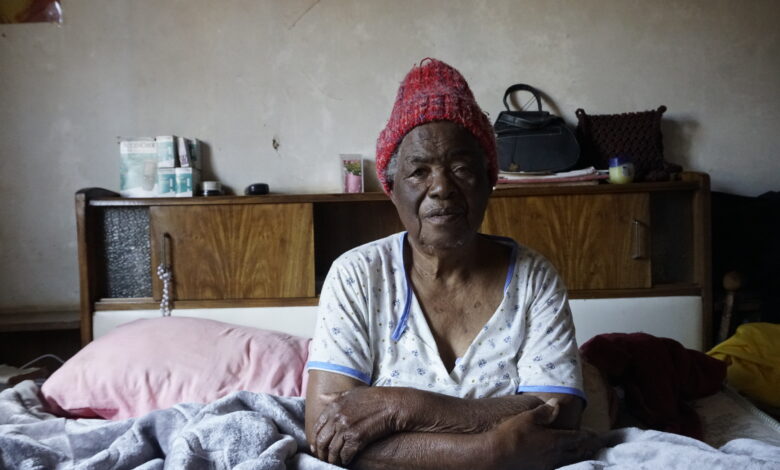
The early morning sun filters through the curtains of Rosemary Tsitsi Kwaramba’s bedroom in Kuwadzana, a high-density suburb of Harare, where the 83-year-old sits quietly on her bed. Her frail frame reflects years spent battling diabetes, high blood pressure, and other chronic illnesses.
For more than three decades, Kwaramba, a retired nurse aide, has fought to stay healthy a task she says was once made easier by the country’s largest medical institution, Parirenyatwa Group of Hospitals. But not anymore.
“I would get treatment for free and of good quality,” she recalls. “Now the hospital is dilapidated, always filled with filth, and I don’t get any medication from there. All you get is a prescription to buy from private pharmacies. Even getting assistance from doctors takes hours of waiting,” she says.
In its 13th post-cabinet briefing in May 2025, the Zimbabwean government confirmed a new agreement with Belarus to revamp Parirenyatwa Group of Hospitals, the country’s largest referral medical centre. Promoted by the government as a foreign direct investment success, the deal follows a pattern of bilateral agreements struck under President Emmerson Mnangagwa’s administration. But analysts say what Zimbabwe is giving in return remains unclear.
They note that such government-to-government arrangements often proceed without public disclosure of key details such as financing implications and national commitments.
While the proposed renovation of Parirenyatwa’s infrastructure could benefit the strained health sector, analysts say it highlights ongoing concerns about bilateral agreements made without parliamentary oversight or a clear indication of their impact on public debt. They also warn about the growing influence of foreign interests over national resources.
According to a 2022 African Forum and Network on Debt and Development (AFRODAD) report, in 2007 Zimbabwe secured a US$1.3 billion loan for thermal plants and a chrome mine, to be repaid through chrome exports. Two years later, a US$5 billion platinum mining deal saw Zimbabwe surrender 50% equity in a US$40 billion concession. In 2011, the US$98 million National Defence College was financed using Marange diamonds as collateral. Most recently, in 2022, Zimbabwe owed US$225.6 million to Trafigura, agreeing to settle the debt with nickel and gold.
The report further states that the Government of Zimbabwe has increasingly taken loans and entered public-private partnerships without proper parliamentary ratification, undermining transparency, accountability, and debt oversight as required by law.
In Zimbabwe, the process of signing bilateral agreements is guided by the 2013 Constitution, which gives the President authority to negotiate and conclude treaties and international agreements under Section 110(2)(c). However, such agreements are not automatically binding. According to Section 327(2)(a–b), any treaty or convention signed by the President only becomes binding once it has been approved by Parliament and does not form part of Zimbabwe’s law unless incorporated through an Act of Parliament. Furthermore, Section 327(3) specifies that agreements imposing fiscal obligations, such as loans or financial commitments, cannot take effect without parliamentary approval.
A Web of Unknowns
Tendai Mbofana, programs director for the Zimbabwe Network for Social Justice, a non-profit advocacy organization, says the Parirenyatwa deal like many other bilateral agreements signed in the Second Republic looks good on paper but lacks transparency.
The Belarus-Parirenyatwa agreement is the latest in a string of high-level deals signed under Mnangagwa’s administration between the governments of Zimbabwe and Belarus. According to the Belarusian Embassy in South Africa, in January 2019 Mnangagwa visited Minsk, where he signed eight memoranda of understanding (MoUs) covering sectors from agriculture and mining to infrastructure and education.
More recently, in April 2025, Belarusian Foreign Minister Maxim Ryzhenkov led a delegation to Zimbabwe, sealing further agreements to advance agricultural mechanization, bus assembly, disaster management, healthcare, tourism, and water infrastructure. A strategic roadmap for 2026–2030 was also developed.
“These agreements are broad and multi-sectoral, but publicly accessible details are limited,” says John Maketo, director of the Zimbabwe Coalition on Debt and Development (ZIMCODD). “MoUs often list sectors without financial transparency,” he adds.
Mbofana agrees. He says that while state media news and broadcasting outlets owned, controlled, or influenced by the government trumpet the arrival of tractors, buses, and mining equipment, the terms, conditions, and financing structures behind these deals are rarely disclosed. Mbofana believes such agreements benefit elite politicians at the expense of ordinary citizens.
According to research by ZIMCODD, there is growing evidence that Zimbabwe’s rising debt to China involves collusion between Chinese authorities and Zimbabwe’s ruling elites, with Chinese loans accounting for around 34% of the country’s external debt as of 2018. Many of these loans are resource-backed repaid through minerals or future resource income and are often authorized directly by the President, with little transparency or accountability. Such arrangements, ZIMCODD warns, undermine public administration and weaken the functioning of a transparent state.
Maketo says that when the terms and conditions of such agreements are not made public, they can have far-reaching consequences for national debt.
“Any loans borrowed should pass the constitutional litmus test of debt contraction transparency. However, when the said deals are opaque, the debt figures from such agreements are not reflected in the official public debt statistics,” he says.
Repeated efforts to obtain comment or access to the agreements from Clerk of Parliament Kennedy Chokuda were unsuccessful.
Compromised Parliamentary Oversight?
Speaker of Parliament Jacob Mudenda recently met with Hon. Sergei Rachkov of Belarus to discuss strengthening bilateral ties. While the meeting highlighted the “warm and growing relationship” between Zimbabwe and Belarus, both parties acknowledged “limited parliamentary engagement” as a major obstacle.
As a proposed remedy, Belarus’ Parliament offered to draft a Memorandum of Agreement to be reviewed by Zimbabwe’s Parliament. However, past experiences suggest parliamentary oversight has been minimal or entirely circumvented.
Even when Parliament engages, the process is flawed, says Edwin Mushoriwa, Member of Parliament for Dzivarasekwa, a high-density suburb of Harare.
“Recently, the government of Zimbabwe signed a bilateral agreement with Belarus. We examined that agreement and demonstrated that it was one-sided it does not promote the interests of Zimbabwe,” he says.
Mushoriwa, a member of the opposition Citizens Coalition for Change (CCC), adds that most members of Parliament belong to the ruling party and vote to ratify such agreements along party lines, without critical analysis.
This concern is echoed by Matabeleland South Senator Nonhlanhla Mlotshwa of the opposition CCC, who, in a parliamentary session on 14 May 2025, questioned whether Zimbabweans truly benefit from such deals. “Right now, our country is experiencing quite a number of people coming in to say they are coming to invest, yet in the long run Zimbabweans are not getting anything,” she said, adding that technical expertise and long-term benefits rarely materialize for local communities.
Even within the ruling ZANU-PF, some members have raised alarms. Mashonaland East Senator Conrad Jericho Gotora, in the same meeting, conceded that while foreign investors may bring money to the state, local communities are left behind. “The roads are being damaged. People in some of those areas do not have clinics or schools, yet the resources are being taken away by nationals of the countries whose treaties we have ratified here,” he said.
Mushoriwa says that, in principle, the executive can sign many MoUs if they benefit the country. “When the executive signs agreements that bind the nation, they need to make sure they bring the MoUs, bilateral agreements, or any other agreements for ratification and this is where we come in as Parliament,” he says.
He adds that recently another agreement was brought to Parliament and was rejected by him and other parliamentarians because it did not favor Zimbabwe. “We demonstrated that, even in terms of exports to that country, Zimbabwe would make less than US$100 in exports mainly from cigarettes while we imported millions of dollars’ worth of their goods. Such agreements destroy Zimbabwe because they do not promote the country’s interests,” he said of what he described as another proposed deal with Belarus.
Mushoriwa also raised concerns over the Parirenyatwa deal. “There is no way anybody can come and do a renovation of your hospital unless they are getting something. That agreement, to me, stinks. It’s opaque, and it does not really put the interests of this country forward,” he added.
Regardless of legal provisions, Mushoriwa says some deals go into effect without parliamentary ratification as required by law. “There are weaknesses in Parliament. With a supermajority, the governing party can afford to cut corners,” he added.
Maketo says the consequences are dire. “ZIMCODD documents multiple loans negotiated through state-owned enterprises, such as China Exim Bank’s US$998 million Hwange power plant, without parliamentary scrutiny. These deals, like the US$98 million National Defence College loan repaid with Marange diamonds, are agreed behind closed doors,” he says.
Maketo adds that such practices risk debt distress and corruption, where military elites and ruling party officials profit while citizens bear the costs.
Countries like Angola have faced similar challenges, spending 17 years of daily oil exports to repay a US$2 billion loan. Maketo warns Zimbabwe faces similar pitfalls “mortgaging resources below value, diverting revenues from healthcare or education, and deepening dependence on creditors.”
As of December 2024, according to the Zimbabwe Public Debt Management Office, the country’s public debt stood at US$21.1 billion.
Exploitation Behind the Development Narrative
In a parliamentary meeting, Deputy Minister of Foreign Affairs Sheillah Chikomo defended the agreements, citing benefits such as “investment inflows, legal protections, technology transfer, and skills development.”
But social justice advocates like Mbofana remain skeptical. “Parliament has been stripped of its oversight role,” he says, drawing parallels with China’s role in Zimbabwe, where seemingly generous investments such as the construction of the new Parliament building mask extractive economic relationships. “China is just here to take and take and take. Zimbabwe will be left with nothing at the end of the day,” he adds.
In 2022, China completed construction of Zimbabwe’s new Parliament building a gift from the Chinese government valued at approximately US$140 million.
Maketo says public debt “ravages livelihoods, people, and steals futures.”
Kwaramba says she now relies on her only surviving son, who lives in South Africa, for medical assistance. Her other six children have died in recent years.
She says the deals Zimbabwe enters with other countries should result in tangible benefits for citizens. “We hear a lot of news reports about these agreements the country is entering into with other countries, but we don’t see any positive change on the ground. I hope this Parirenyatwa deal will be different, but I am not optimistic,” she says.
Maketo references deals such as the hundreds of buses received from Belarus in 2019, whose repayment terms were undisclosed, “suggesting mineral swaps.”
He adds, “In 2009, through Anjin Diamonds, Zimbabwe acquired a US$98 million loan for the Defence College, repaid via diamond revenues with zero parliamentary debate.”
A Call for Accountability
Mushoriwa insists that legal safeguards exist but are often ignored. “The government must negotiate treaties, but for them to bind the country, they must come through Parliament for ratification,” he says.
He fears rushed agreements hinder proper scrutiny. “Parliament sometimes just endorses most of these agreements,” he says.
Maketo echoes the call for transparency through an inclusive public debt audit to establish exactly how much Zimbabwe owes and to whom.
However, Mbofana warns that only public pressure will force accountability. “We are all being affected by these shady deals, and we are all impoverished. Let’s stand together and demand accountability,” he adds.