“We Can’t Survive”: Harare Ride-Hailing Drivers Reveal the Downside of Zimbabwe’s Gig Economy

By Linda Mujuru
Dozens of drivers working under inDrive, Bolt, Vaya and other ride-hailing platforms inch along Zimbabwe’s cratered roads each day, hoping for a trip request that will bring in a few dollars. But for many, the notification that once signalled opportunity now feels like a losing gamble. With worsening road conditions, rising fuel costs, and an overcrowded transport market driven by unemployment, Zimbabwe’s digital ride-hailing boom is beginning to creak under pressure.
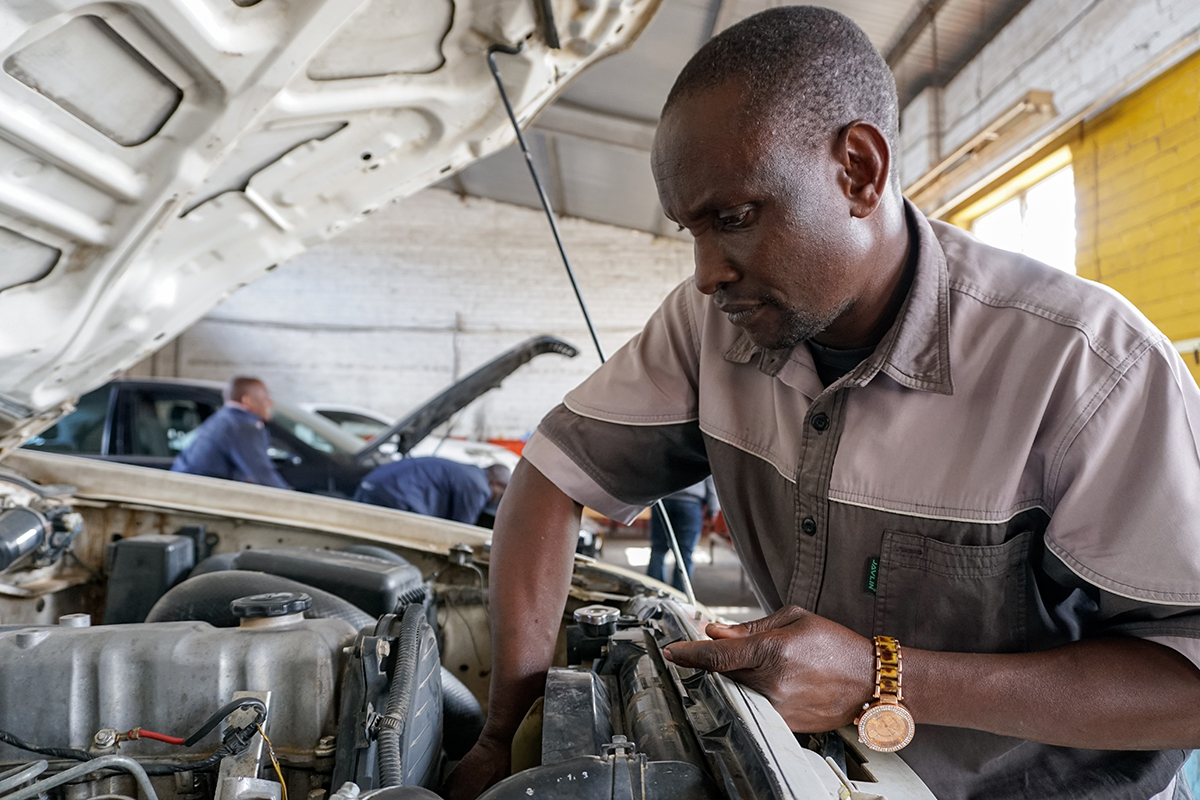
Elton Tembo is one such driver. Two years ago, he returned home from South Africa after migration opportunities dried up and saw promise in Zimbabwe’s growing ride-hailing sector. But today, he said the industry is no longer what it was.
“The business is no longer lucrative. I’m doing it because the alternative is unemployment, but honestly, this business is no longer making sense, you hardly get any money from it,” he said.
For years, inDrive, a global ride-hailing platform, became the preferred app for many urban Zimbabweans. Its “name-your-price” model allowed passengers to propose fares and drivers to accept or decline based on viability. But as Harare’s roads continue to deteriorate, with deep potholes damaging suspensions, tyres and shocks, drivers say the system no longer works in an economy where every kilometre has become costly.
“The app doesn’t consider our road conditions,” said Tembo, who has worked across several platforms over the past three years. “Sometimes a trip is five kilometres, but it takes 25 minutes because of potholes. After fuel and repairs, you realise you worked at a loss.”
He said the second challenge is drivers who are desperate enough to accept fares far below cost. “Many of the customers don’t want to pay a fair fee, and drivers accept the low offers because they have no other options,” he added.
Zimbabwe’s job market remains one of the toughest in the region, pushing thousands of young people into the informal economy, including ride-hailing, even when it barely pays. With more drivers joining each month, competition has intensified.
“You can refuse a trip, but someone else will take it for even less,” Tembo said. “People are desperate. Even when the fare doesn’t make sense, drivers still accept it.”
Another driver, Evans Taruvinga, shares the same frustrations. “The app allows clients to reduce the fee to levels that are not profitable for us,” he said. “Many times, the police request rides on inDrive, and once you arrive at the pickup point, they tell you that your vehicle is not registered as a taxi and you’re operating illegally, so you become subject to arrest.”
According to the Zimbabwe National Statistics Agency (ZIMSTAT), the official unemployment rate for people aged 15 and above stood at 20.7% in the second quarter of 2025, based on the agency’s most recent Quarterly Labour Force Survey. Earlier surveys from 2023 and 2024 reported similar figures, with unemployment hovering between 20% and 21.8%.
Youth unemployment remains significantly higher. ZIMSTAT’s 2023 Quarterly Labour Force Survey found that expanded unemployment, which includes those actively looking for work as well as those available but not actively seeking, reached 58.7% for people aged 15–24 and 47.1% for those aged 15–35. Using this broader definition, a 2023 report based on ZIMSTAT data placed national expanded unemployment at 46.7%. Importantly, ZIMSTAT counts informal-sector activities such as vending, casual work and subsistence farming as employment, meaning many people classified as “employed” are actually surviving on irregular and low-income work.
Although several local ride-hailing applications, including Hwindi, have launched to offer homegrown alternatives, drivers say passenger volumes remain extremely low. Most Zimbabweans either do not know the local apps exist or prefer the larger foreign platforms they already trust.
“We want to support local apps, but there are no customers there,” Tembo said. “You can switch on for the whole day and not get one request. So we end up going back to foreign apps like inDrive because people use them,” said the 32-year-old.
Meanwhile, passengers continue pushing fares downward in a market where supply vastly outstrips demand. A ride that should cost US$5 often attracts offers of US$2, and someone will accept it.
Drivers say the situation is becoming unsustainable. Repairs can swallow weeks of earnings. Fuel prices fluctuate constantly. And with most of Harare’s roads awaiting long-promised rehabilitation, the burden falls on those trying to make a living behind the wheel.
Taruvinga adds that the inDrive application offers little security to drivers. “When registering, you must provide your name, vehicle registration book and many security documents, but the client is not asked to provide any documents, and some don’t even have profile pictures. This poses a security risk to us, especially during night rides,” he said.
For Tembo, ride-hailing apps were once a lifeline. Today, they reflect an economy tightening around workers with few alternatives.
“We’re working harder than ever,” he said, “but earning less than ever. From Thursday up to Sunday, I don’t sleep at home, trying to get customers to meet my weekly target of US$120. Only if I reach that target for the car owner am I able to get something for my own survival,” said Tembo.