Zimbabwe’s Mining Communities Still Waiting for Benefits from Granite Extraction
By Linda Mujuru
Living Beside Wealth, But Seeing None
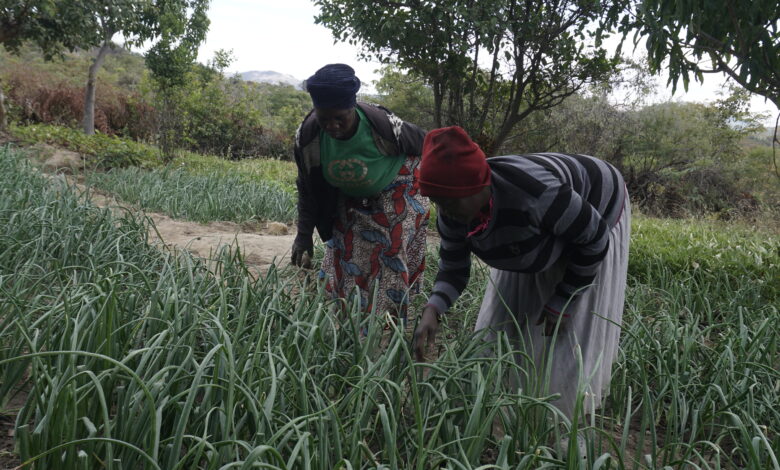
Co-wives Mapuwei Mapisa (49) and Hazvinei Magede (56) bend low over their onion crop, carefully pulling out weeds from what has become their only source of livelihood. Just beyond their fields, granite mining operations scar the hills of Mutoko, extracting wealth that, according to villagers like Mapisa and Magede, never filters back to their community.
“We started living here in 1991 when we started our family. Back then, there was not much mining taking place, but some companies were already in the area. Over all these years, we have not seen any meaningful development,” said Mapisa.
Magede adds that by now, they had expected mining companies to invest in boreholes, tar local roads to reduce dust pollution from haulage trucks, and generally improve infrastructure, but that has not been the case.
The Promise and Collapse of Community Share Ownership Trusts
The Zimbabwean government plans to revive the Community Share Ownership Trusts (CSOTs), a policy that requires mining companies to contribute a portion of their earnings toward local development. The move was announced at a post-Cabinet briefing, though further details of the implementation plan have not yet been disclosed. Designed to empower communities in mineral-rich areas, CSOTs were originally intended to channel 10% of mining revenues into tangible projects.
But after years of collapse and mismanagement, critics warn that unless past failures are addressed, communities like Mutoko may still be left behind.
Introduced under Zimbabwe’s Indigenisation and Economic Empowerment Act (IEEA) of 2007, CSOTs aimed to ensure communities gained a meaningful stake in resource-based companies, especially those owned by foreign investors. At their peak, around 60 trusts operated across the country, with some success stories.
However, the 2018 amendment of the IEEA through the Finance Act No. 1 of 2018 removed the mandatory contribution clause as the government sought to improve the country’s investment image. This reversal triggered the collapse of many CSOTs, which today remain largely dormant due to a lack of funding.
When Promises Fail: Mutoko’s Experience
In Mutoko and Mudzi districts, a CSOT was launched in 2010, but few companies complied. Of the six qualifying businesses, only three, Natural Stone Export Company, Southern Granite, and Zimbabwe International Quarries (ZIQ), contributed seed money, and even then, amounts fell far below the mandated 10%.
Despite several attempts to reach them for comment, these mining companies had not responded by the time of publication.
Peter Sigauke, former Chief Executive Officer of the Mutoko Rural District Council (2001-2022), blames the failure on multiple factors. “The Mutoko CSOT was not effective because quarry operators did not cooperate. At some point, they were given an ultimatum to pay US$10 million, but they only deposited about US$200,000 in total, and it was in batches,” he explains.
Sigauke also cites mismanagement and lack of training among the trust’s board members, including himself. “There was political interference from some members of parliament because they were now using it as a political tool to get mileage,” he said.
He admits that projects were often imposed on the community without consultation. “They were not involved in choosing the project which was supposed to empower them,” he adds.
For CSOTs to succeed, Sigauke said, the government must create a legal framework that mandates company contributions and professionalises trust management. “There’s a need for a separate entity to run the CSOTs, not chiefs, councils, and handpicked people with no knowledge of running a commercial company,” he said.
Models That Work Elsewhere
Across Africa, mining companies are increasingly mandated either by law or through negotiated agreements to contribute directly to host community development through Community Development Agreements (CDAs) or social and labour plans.
According to Scientific Research Publishing, under Malawi’s Mining and Minerals Act, large-scale mining firms must enter into CDAs with local communities, outlining commitments such as building schools, clinics, boreholes, and offering scholarships.
In Nigeria, the Minerals and Mining Act of 2007 similarly requires firms to sign CDAs and contribute to a sovereign wealth fund, although transparency and community management remain challenges, according to the 2021 International IDEA Mineral Resource Governance in Africa report.
When Trusts Deliver: The Zimplats Example
Wilson Chinzou, CEO of the Zimplats Mhondoro-Ngezi Chegutu Zvimba Community Share Ownership Trust, said their trust received an initial US$10 million from Zimplats and has delivered substantial development.
“We built nine classroom blocks in Zvimba, 12 in Mhondoro, 27 in Chegutu, and electrified schools in Chegutu and Zvimba. We computerized Mashayamombe Vocational Training Centre, constructed clinics, converted old buildings into medical facilities, and even built an X-ray block in Zvimba,” said Chinzou.
The trust also holds a 33.33% share in Sable Chickens, a poultry and citrus farming business involving local communities. Beyond these ventures, it operates logistics and microfinance projects supporting farmer groups in poultry, beekeeping, strawberry farming, and fishing.
Chinzou stresses that successful CSOTs depend on strong governance and community engagement. “There must be transparent leadership, regular oversight, and inclusive representation especially of women, youth, and marginalised groups,” he said.
The Call for Social Justice
Clever Mandizvidza, Secretary General of the Association of Community Share Ownership Trusts in Zimbabwe, said conflicting laws have freed mining companies from contributing to local development.
“According to the government, the reason why the Indigenisation and Economic Empowerment Act was repealed was that it was scaring away investors. But in trying to please investors, the new law disregarded that communities were only getting 10%,” he said.
Mandizvidza argues that ensuring communities benefit from their natural resources is not just national policy but a matter of justice. “Resources were endowed to communities by God for their benefit. When minerals are extracted and communities don’t benefit, it’s social injustice,” he said.
He rejects the notion that requiring companies to share profits deters investment. “This concept is common in the region. Investors should not see it as a threat,” he adds.
“They Should Be Doing Much More”
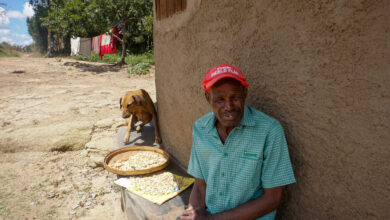
In Mutoko, villager Edzai Zimbudzi said the only tangible benefit she has seen from the granite mining companies is the construction of a local clinic.
“We used to walk more than five kilometres to access healthcare, so we’re happy to have a clinic nearby now,” she said. “But these companies should be doing much more for the community.”