Cash at the Counter: Back-to-School Rush Reveals Zimbabwe’s Enduring Love Affair with Hard Currency

Cash at the Counter: Back-to-School Rush Reveals Zimbabwe’s Enduring Love Affair with Hard Currency
By Staff Reporter
By mid-morning on a narrow pavement outside a local stationery shop, parents and guardians were already crowded together. Some clutched dog-eared school lists, others discreetly counted notes in their hands as they queued patiently on the first day of the new school term. Inside the shop, shelves were stacked with exercise books, pens and mathematical sets.
Among those waiting was 34-year-old Marvellous Gumbi, a mother of three with two school-going children. She said she bought her children’s stationery during her lunch break.
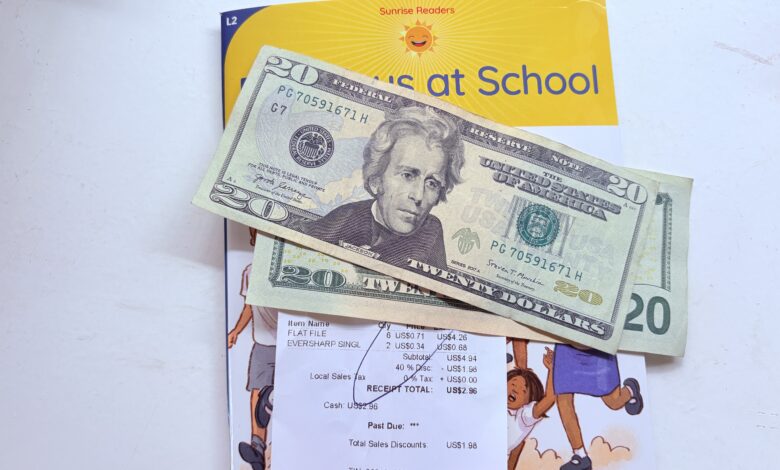
“I came here specifically because they were offering a 40 per cent discount on all cash payments,” Gumbi said. “I earn in the local currency, ZIG, but it was more expensive to use it than the US dollar because of the cash discounts,” she said.
Gumbi works for a local plastic manufacturing company located a few blocks from the stationery shop.
Despite years of policy shifts aimed at promoting electronic payments, cash , particularly foreign currency, continues to dominate day-to-day transactions, especially during peak spending periods such as the back-to-school and festive seasons.
Zimbabwe’s reliance on cash is rooted in a complex economic history. Periods of currency instability, inflation and changes in legal tender had eroded public confidence in formal banking systems. While mobile money platforms and bank transfers remain widely used, persistent transaction charges, settlement delays, and pricing differences between cash and electronic payments have kept physical cash firmly in circulation. For consumers, discounts like the one offered at the stationery shop made a significant difference when purchasing multiple items at once.
A 2025 IMF–World Bank technical assistance report on the South Africa–Zimbabwe payments corridor found that Zimbabwe’s heavy reliance on cash, particularly US-dollar cash, substantially increased operational costs for remittances and everyday transactions. Cash-related expenses, including handling, security, transport and logistics, accounted for more than 50 percent of total cost structures. The report noted that this dependence limited the adoption of more efficient digital payments and kept overall payment costs high while constraining financial inclusion.
Retailers, however, argue that cash payments reduce their operational costs. David Kaniwa, a small grocery shop owner popularly known as a tuckshop operator, said electronic transactions typically attract bank charges, mobile money fees and, in some cases, delayed access to funds.
“In an environment where margins are thin and costs volatile, immediate access to cash is crucial for restocking and meeting daily expenses,” Kaniwa said. “Where I buy my stock, they want cash payments and never electronic payments.”
Stevenson Dhlamini, an economist and lecturer of Applied Economics at the National University of Science and Technology, said traditional banks in Zimbabwe and in much of post-colonial Africa were artefacts of a different economic era, misaligned with the realities faced by most citizens.
“These banks were built to serve a small, formally employed, salaried class and large corporations,” Dhlamini said. “Their processes, heavy documentation, high minimum balances and monthly ledger fees are exclusionary by design. They are simply not equipped to service a street vendor who makes a few dollars a day in profit,” he said.
He added that transaction costs are prohibitively high for both banks and customers operating at the margins of the economy.
More critically, Dhlamini said, trust in banks had been severely damaged following the government’s conversion of US-dollar savings into local currency at a mandated one-to-one rate.
“The very idea of a bank as a safe store of value was annihilated,” he said. “A bank account became a liability, a vehicle through which the state could expropriate wealth. A rational economic actor would hesitate to deposit scarce hard currency into an institution from which they might only withdraw a depreciated electronic equivalent.”
Kaniwa added that many wholesalers sourced goods from neighbouring South Africa and Zambia, with some smuggling them into Zimbabwe, making electronic payments impractical for their operations.
The growing visibility of cash discounts raised an important legal question: were such practices permitted under Zimbabwean law?
There was no explicit provision in Zimbabwean legislation prohibiting businesses from offering discounts for cash payments. In principle, retailers are free to set prices and offer promotions, provided they were transparent and not misleading. The Consumer Protection Act required traders to clearly display prices and ensure consumers are not deceived about the cost of goods or services, as long as discounts are openly communicated.
In recent years, the Reserve Bank of Zimbabwe had promoted electronic payments as part of broader efforts to formalise the economy and improve financial oversight. Yet the persistence of cash incentives highlights the gap between policy intentions and economic realities on the ground. For many traders and consumers alike, cash remains the most predictable and trusted medium of exchange.
As parents left the stationery shop later that day, bags filled with books and receipts folded into pockets, the discount offer remained firmly in place.
“Such discounts ease pressure for us parents but finding the US Dollar cash to buy such supplies is a headache for another day,” said Gumbi.